Marginality has long been regarded as a condition of disadvantage, capturing the precarious situation of individuals or groups living at the edges of society, excluded from economic, political, or cultural resources. Yet, marginality can also be understood as a space of possibility, where rules can be bent, surveillance weakened, and alternative ways of belonging and resisting are negotiated. Rather than only connoting exclusion, marginality may signal transgression, creativity, and opportunity. In socialist and dictatorial contexts in particular, the margins often became paradoxical sites: simultaneously threatening to the regime’s authority and enabling new forms of grassroots resistance, everyday practices of evasion, or creative adaptations to life under constraint.
The study of marginality spans a wide spectrum of meanings. Early sociological thought, from Robert Park’s concept of the “marginal man” to Everett Stonequist’s emphasis on being caught between antagonistic cultures, has framed marginality as a condition of “in-betweenness.” Later analyses expanded this framework, exploring cultural, social, and structural marginality in contexts ranging from gender and ethnicity to political disenfranchisement. Within dictatorial regimes, these categories take on heightened significance: cultural marginality emerges in borderlands where linguistic, ethnic, or national identities intersect; social role marginality surfaces where gender, age, or class deviate from prescribed norms; and structural marginality is amplified by political systems that systematically disenfranchise, place under surveillance, and repress.
Socialist societies across Europe, Asia, Africa, and Latin America generated a wide array of margins. Those deemed “unfit” for socialist modernity—whether on biological, cultural, or ideological grounds—were marginalized through exclusionary policies and stigmatization. Others found themselves in liminal positions: neither fully included nor entirely excluded, navigating blurred boundaries of acceptance. And there were those who preferred to extricate themselves from all mainstream or underground currents, in an effort of creation resulting in hidden cultural products and cocooned spaces to be revealed many years in the future. Borderlands, rural peripheries, and cultural enclaves functioned as ambiguous spaces where the official grip of power was looser, providing conditions for negotiation, subversion, and even rebellion.
This special issue of History of Communism in Europe seeks to explore these paradoxes of marginality under socialist regimes. We invite contributions that examine how marginal, liminal, and unfit groups or individuals were constructed, controlled, resisted, and reimagined across different socialist contexts. By focusing on the outskirts of socialist societies, we aim to advance comparative insights into the dynamics of inclusion and exclusion, domination and resistance, conformity and transgression.
We welcome both historical and interdisciplinary perspectives that engage with, but are not limited to, the following themes:
- Borderlands and peripheries as spaces of negotiation, transgression, and alternative political life
- Ethnic and cultural minorities navigating marginal positions within socialist frameworks
- Youth, students, and generational outsiders as both targets of control and agents of dissent, acting in both rural and urban areas
- Gendered marginalities, including women and queer communities in socialist societies
- The medically and biologically “unfit”: disability, eugenics, and exclusion in socialist projects
- Political dissidents and underground networks operating from the margins
- Everyday resistance and hidden transcripts of marginalized groups
- Urban and rural liminalities, including slums, villages, forests, and neighbourhoods beyond strict state control
- Cultural production at the margins: literature, art, and music challenging socialist orthodoxy
- Comparative perspectives on marginality in socialist societies in Europe and beyond (Asia, Africa, Latin America)
We encourage scholars from history, sociology, anthropology, cultural studies, and related disciplines to contribute. Papers may be comparative or case-study based and should illuminate the complex interplay between marginality, power, possibility and repression in socialist societies.
Contributors are kindly asked to write abstracts (English or French) that do not exceed 500 words.
Deadline: December 15, 2025.
You may submit your proposals at: hce-online@iiccmer.ro, dalia.bathory@gmail.com, stefan.bosomitu@gmail.com
Selected authors will be notified by December 20, 2025.
The deadline for the final draft of the paper is May 30, 2026.
The academic journal History of Communism in Europe is edited by The Institute for the Investigation of Communist Crimes and the Memory of the Romanian Exile. It is a journal open to all inquiries that have the objectivity, complexity and sophistication required by any research on the issue of communism, as well as on the different aspects of totalitarianisms of 20th Century Europe. These scholarly investigations must remain an interdisciplinary enterprise, in which raw data and refined concepts help us understand the subtle dynamics of any given phenomenon.
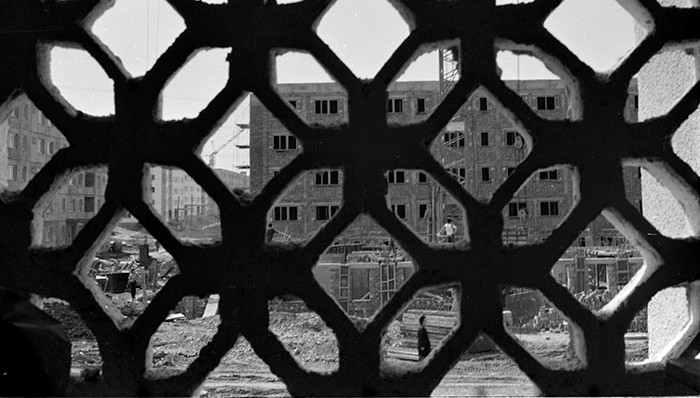
(Photo: Building site in Mănăștur Neighbourhood, Cluj-Napoca, 1965-1972, © Minerva Cultural Association, Cluj, https://www.photoarchive.minerva.org.ro/)